- 15% - 20% Off on Selected Items
- Ocean Building, 80 Shanghai St, Yau Ma Tei, Kowloon, Hong Kong
- aesthetics@lunavellearte.com

Corners Deserve Attention Too: Clever Decor Ideas for Forgotten Spaces
Walk into your living room and look toward the edges. There it is: that quiet corner doing absolutely nothing. Maybe it holds a lonely socket, an abandoned chair, or a suspicious collection of dust. Yet that little patch of unused space could become the details that gives your entire room character. Corners are where thoughtful decorating gets interesting. They tend to invite creativity without demanding a complete makeover, which gives you room to experiment with texture, height, color, and also personality. Before buying another centerpiece, look at the spaces you have ignored. Your next decorating triumph may already be waiting quietly in the corner.
Why Corners Matter More Than You Think
A beautifully decorated room is rarely defined by one dramatic object. Its appeal comes from how individual details connect, guiding the eye naturally from one area to another. Empty corners can interrupt that visual journey. They make an otherwise considered room appear unfinished, particularly when furniture and decorative pieces are concentrated toward the center.
Giving a corner purpose doesn’t mean filling every available inch. The goal is to make the space feel intentional. A sculptural vase, slender lamp, compact table, or arrangement or decorative objects can create a visual destination without overwhelming the room.
Think of corners as punctuation in interior design. They may occupy limited floor space, yet they can complete the sentence your room is trying to write.
Start With a Statement Vase
Imagine a quiet dining room center with nothing but bare walls and open flooring. Now place a tall ceramic vase there, perhaps filled with dried branches, sculptural stems, or pampas grass. Suddenly, the corner has movement, height, and also presence.
Statement vases work beautifully because they tend to occupy vertical space without requiring bulky furniture. Their shapes can introduce curves into rooms dominated by straight lines, while textured finishes add another layer of visual interest.
For a restrained look, choose one substantial vase, and allow it to stand alone. If you prefer something more expressive, group two or three vessels of different heights. Keep a common element, such as material, finish, color family, running through the arrangement so it feels collected rather than accidental.
Turn Lighting Into Decoration
Corners often become darker than areas, especially when natural light enters from one direction. That makes lighting an opportunity rather than merely a practical fix.
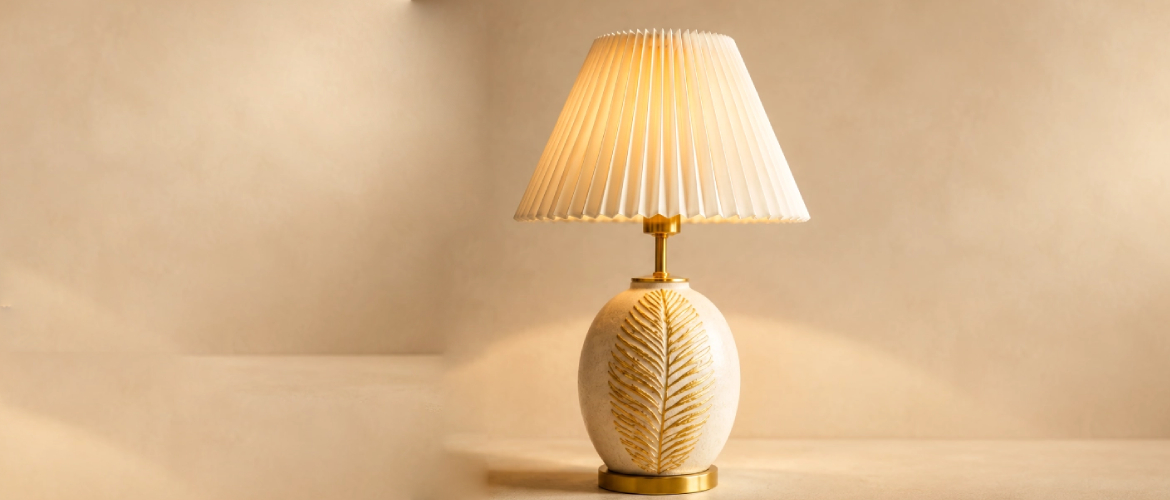
A sculptural floor lamp can turn an overlooked corner into an atmospheric feature. Look for designs with interesting silhouettes, textured shades, curved stems, or unusual bases. When illuminated, it adds warmth and creates shadows that give surrounding textures greater depth.
You can also pair a small table lamp with a narrow pedestal or side table. Add one decorative object beside it, and you have a compact vignette that feels deliberate.
Lighting does more than brighten a forgotten space. It gives that corner a reason to exist after sunset.
Build a Tiny Gallery Moment
A narrow corner can become an intimate display for framed artwork, prints, photographs, or decorative wall objects. Instead of spreading pieces across a large surface, use the corner’s vertical lines to create a concentrated composition.
Try hanging two or three frames upward rather than outward. Alternatively, allow artwork on adjoining walls to visually meet at the corner. This creates an immersive effect that draws attention toward an area people might otherwise overlook.
The secret is restraint. Give each piece enough breathing room and consider how the frames relate to nearby furniture and accessories. A tiny gallery should feel like a discovery, not a storage solution for every frame you own.
Give Plants Their Own Stage
Some corners seem nearly designed for greenery. A tall indoor plant can soften sharp architectural lines, introduce organic shapes, and bring natural texture into spaces filled with manufactured materials.
Choose a planter that contributes to your decorating story. Ceramic, woven, stone-inspired, metallic, or textured designs can make the container as visually interesting as the plant itself. Raising a smaller plant on a stand can also create height and prevent it from disappearing beside larger furniture.
For corners with limited natural light, consider decorative dried foliage or realistic artificial greenery instead. The purpose is visual balance, so choose something proportionate to the space rather than forcing an unsuitable arrangement.
Create a Corner That Tells a Story
Decorative items become more engaging when they feel connected to something personal. Perhaps you have a handmade bowl from a memorable trip, an inherited vase, a small sculpture that made you smile, or books you return repeatedly.
Start with one piece that carries visual or personal significance. Build around it with complementary items, varying with heights and shapes. A narrow console, floating shelf, pedestal, or small side table can provide the foundation.
Avoid arranging everything with mathematical precision. Slight asymmetry often feels warmer or more neutral. You want visitors to pause and wonder about the objects rather than immediately recognize that they were positioned according to a formula.
Make Empty Corners Work Harder
Consider a slim bar chart styled with glassware and decorative accessories, a compact reading chair beside a floor lamp, or a narrow table holding a tray for everyday essentials. Even a decorative basket can introduce texture while providing discreet storage.
The key is refusing to sacrifice appearance for function. Practical objects can still contribute to the room’s visual identity.
A reading corner, for example, can include a textured cushion, soft throw, sculptural lamp, and small table decorated with a candleholder or vase. Each item serves a purpose while contributing to the composition.
Play With Height Instead of Width
Small corners often tempt people to choose tiny decorations . Ironically, this can make the area feel busier and less confident.
Tall mirrors, elongated artwork, floor-standing sculptures, vertical shaving, hanging planters, and slender lamps draw the eye toward the ceiling. This creates a sense of height while leaving valuable walking space relatively open.
A mirror is effective because it tends to reflect light and surrounding details, helping compact areas feel more expansive. Choose a frame that complements your existing decor, whether your room leans on the contemporary side or is rustic, eclectic, or understated.
Master the Art of the Decorative Trio
Choose items with different heights and forms: perhaps a lamp, a small vase, and a decorative bowl. The variation encourages the eye to travel through the arrangement instead of landing on one flat line.
The objects don’t need to match. In fact, combinations often become more interesting when materials contrast. Smooth ceramic beside textured wood, glass beside metal, or woven fibers beside stone-inspired finishes can create depth.
What matters is connection. Repeat a color, shape, finish, or mood elsewhere in the room. This subtle repetition makes the corner feel integrated rather than added as an afterthought.
Know When the Corner Needs Less
Negative space gives decorative pieces elsewhere in the room some space to breathe. If your interior already contains patterned textiles, artwork, shelving, statement furniture, and numerous accessories, another elaborate corner arrangement could create visual competition.
Instead, consider one intentional object. A sculptural floor piece, over-sized lantern, elegant planter, or striking lamp may be enough.
Ask yourself what the corner contributes to the room as a whole. Does it need height? Warmth? Texture? Function? A focal detail? Once you are able to identify what is missing, choosing the right piece becomes far easier.
Let Forgotten Spaces Become Your Signature
The difference between a room that looks decorated and one that feels thoughtfully composed often hides in the details people nearly overlook. Corners belong to that category.
They tend to offer freedom. You can experiment without redesigning the entire room, introduce decorative items without crowding central surfaces, and create small stories that tend to reveal your personality gradually.
Walk through your home again, but this time, ignore the obvious places. Look beside the sofa, behind the dining area, along the hallway, near the staircase, and between windows. Notice where your eye stops because nothing is happening.
Choose a vase that adds height. Bring in a lamp that changes the mood. Display objects with meaning. Add greenery, artwork, texture, or a practical element that earns its footprint.
The fact is: your home doesn’t need more things simply for the sake of having them. It needs pieces chosen with purpose, positioned where they can make a difference.